Esa's Ramadan Countdown
Esa, almost six and a half, tries a practice fast before Ramadan and learns there is more to the month than going hungry, in a picture book for ages 4 to 9.
Start with a 7-day free trial.
What is Esa's Ramadan Countdown about?
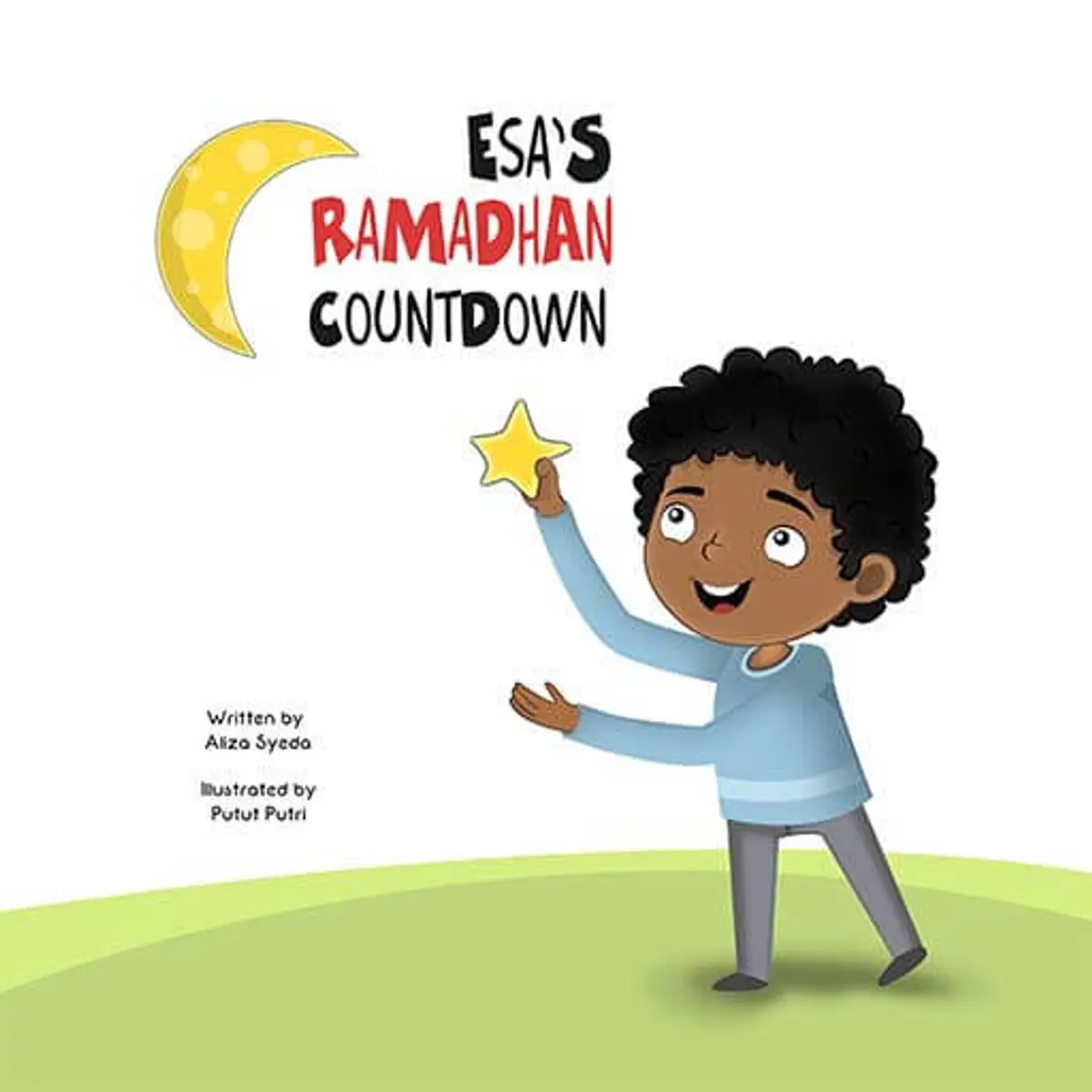
Esa's Ramadan Countdown is an Islamic picture book for children aged 4 to 9 about a little boy who is desperate to fast in Ramadan, and who learns that the month is about good deeds, kindness and sharing, not only about going hungry.
Esa comes home from school bursting with excitement: Ramadan starts in two days, and he is a big boy now, almost six and a half. His mum is worried he is too young, so she suggests a practice fast for half a day. Esa insists on a full one. He wakes early for suhoor and is sure it will be easy peasy, but by the middle of the morning his tummy is grumbling, and there are still hours to go until iftar.
Seeing him sad, his mum sits him on her lap and explains that there are many ways to show Allah that he is trying to be a good Muslim. Together they make a good deeds calendar for the fridge, with one good deed for every day of the month and a special surprise at the end.
The book is a great introduction to Ramadan for young children. It shows that there are many simple, practical things they can do every day to please Allah, and that it is all right to find something hard. It is written by Aliza Syeda and illustrated by Putut Putri, and it is also an animated video in the Miraj library.
What your child will learn
- Ramadan is about good deeds, kindness and sharing, not only about not eating.
- There are simple things we can do every day to please Allah.
- Young children can practise fasting step by step.
- It is all right to find something hard and keep trying.
The story of Esa's Ramadan Countdown
One day, Esa came home from school so excited that he could barely contain himself. It was almost time for his favourite month.
"Mama, it's almost Ramadan," he said. "Can I please fast this year? Please, please, please? I'm a big boy now. I'm almost six and a half."
Esa's mum was happy that he was so excited about Ramadan. But she was also worried that he was too young to fast and would get too hungry. Ramadan started in two days, she said, so why not try a practice fast the next day, and fast for half the day?
But Esa did not want a half fast. He wanted a full one. He could do it, he said. He was a big boy now. His mum was hesitant, but she did not want to discourage him, so she agreed, a little grudgingly: they would try a full practice fast the next day and see if he was ready.
The next morning, Esa woke up very early to have suhoor with his family. He was eager to prove that he was ready to fast, just like everyone else in his family. He started the day by brushing his teeth, reading some books and playing with his toys.
Grumble, grumble, grumble. "I'm not hungry at all," Esa told his mum. "This is easy peasy."
Then he looked at the time, and was surprised to see that it was only ten o'clock in the morning. How much longer? Eight more hours until iftar, his mum replied. She reminded him that this was only a practice fast: he could eat whenever he wanted. No, said Esa, this was easy. He was not hungry at all. And he carried on with his day.
He played with his sister, finished an animal puzzle, coloured in his book and watched his favourite TV show. Grumble, grumble, grumble. What time was it now? Eleven o'clock. Only eleven? How could that be?
Esa was starting to get very, very hungry. This was really hard, he thought, but he was going to keep trying. He decided that he needed to keep himself busy to pass the time, so he played with his toys again and wrote in his journal.
Grumble, grumble, grumble. Now Esa was even hungrier than before, and he was feeling sad too. He had not thought that fasting would be this hard, and he could not stop thinking about all the delicious food he wanted to eat.
Esa's mum saw that he was feeling down, so she called him over and sat him on her lap. Ramadan was not just about staying hungry and not eating, she told him. There were lots of things he could do in Ramadan to show Allah that he was trying to be a good Muslim.
Then she had an idea. What if they did something really special this Ramadan and made a good deeds calendar? For every day of the month of Ramadan, they would do a good deed to make Allah happy, and at the end of Ramadan they would celebrate with a special surprise.
Esa's eyes glimmered with excitement. It was a great idea, he said.
Esa and his mum gathered everything they needed to make a super special Ramadan calendar: a big sheet of cardboard, a ruler and coloured pencils. They made the calendar and added a good deed for each day of the month. When it was finished, they hung it up on the fridge to keep track of his good deeds. Esa could not wait for Ramadan to begin so that he could get started.
Talk about it afterwards
- Why did Esa want to fast so much?
- How did Esa feel as the morning went on?
- What did Esa's mum say Ramadan is about?
- What good deed would you put on your own Ramadan calendar?
Words to know
- Ramadan
- The month in which Muslims fast from dawn to sunset.
- Suhoor
- The meal eaten before dawn on a fasting day.
- Iftar
- The meal that breaks the fast at sunset.
Frequently asked questions
What age is Esa's Ramadan Countdown suitable for?
Children aged 4 to 9. It is ideal for young children who want to fast like the grown-ups and are not yet ready for a full day.
What does Esa's Ramadan Countdown teach children?
That Ramadan is about good deeds and kindness as well as fasting, and that every day of the month is a chance to please Allah.
Who wrote Esa's Ramadan Countdown?
Aliza Syeda wrote it and Putut Putri illustrated it.