Is That a Teapot by the Toilet?
Rayyan learns to use the toilet the Muslim way, from the left foot in to washing with water, in a potty training picture book for children aged 4 to 6.
Start with a 7-day free trial.
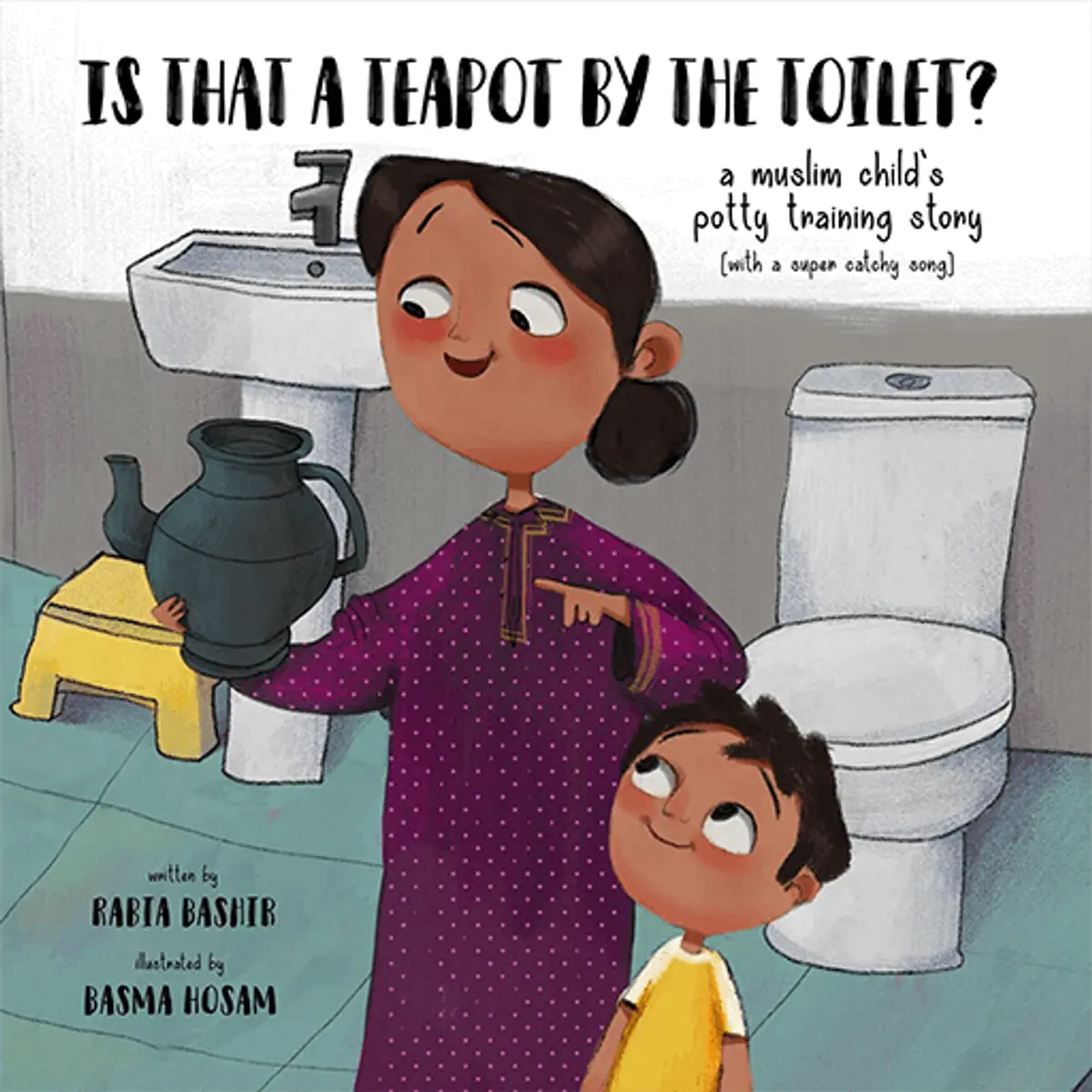
What is Is That a Teapot by the Toilet? about?
Is That a Teapot by the Toilet? is an Islamic picture book for children aged 4 to 6: a rhyming potty training story about a little boy called Rayyan who learns to use the toilet the Muslim way.
It is a big day for Rayyan and his mum. At the bathroom door they remember what they practised: in with Bismillah and the left foot first. Rayyan steps in with his right foot, so they step out and try again, and again, until Mum laughs that they are dancing. When he has finished, Mum shows him how Muslims clean themselves with water, using the old jug that sits by the toilet. Is that a teapot? Rayyan asks. No, Mum laughs: in Bengali it is a bodna, and in Urdu a lota. Then they leave with the right foot and say Ghufranak.
Over the following weeks there are plenty of accidents, until Rayyan learns when he needs to go. Out shopping, the family finds only a watering can, and Rayyan notices the plastic cup at a wedding hall and the little shower on the wall at the mosque. At the park, Mum pulls out a bottle: her own travelling lota. A year later, it is his little brother Ridwan's turn.
The book ends with questions to talk about together. It is written by Rabia Bashir and illustrated by Basma Hosam.
What your child will learn
- We go into the toilet with the left foot and Bismillah, and leave with the right foot.
- Muslims clean themselves with water after using the toilet.
- When we leave the toilet, we say Ghufranak.
- Learning something new takes practice, and mistakes are all right.
The story of Is That a Teapot by the Toilet?
A big day
In a busy city lived two brothers, Rayyan and Ridwan, with their mum and dad. One day was a big day for Mum, and especially for Rayyan: he was ready for potty training. And so they began.
At the bathroom door, they remembered what they had practised: go in saying Bismillah, left foot first. But out came Rayyan's right foot instead, so they jumped back outside and tried again. He got it wrong again, and again they stepped out. "It's like we're dancing!" Mum laughed. The third time was perfect, and in they went, giggling.
Rayyan sat on his mini toilet with his hand on his chin. When he had finished his wee and was about to stand up, Mum said, "Wait! You must clean yourself with water. That's what Muslims do." She lifted up an old-looking thing that had been sitting by the toilet.
"Is that a teapot?" asked Rayyan, puzzled.
"A teapot?" Mum chuckled. "It's not the right place for one! In Bengali we call this a bodna. That's what Nana and Nanny taught me. In Urdu it's called a lota. That's what Daddy learned from his family."
"Lota," Rayyan repeated. He could say it easily. Mum poured water to wash him clean. "Now we leave with the right foot," she said, "and we say Ghufranak." MashaAllah, Rayyan had done very well.
Weeks of practice
The training was going well so far, but many, many days followed, full of "oh"s and "oh no"s. Little by little, Rayyan got better at knowing when he needed to go. Several weeks later, Mum and Dad noticed that the accidents were stopping. "Let's go out," Dad suggested, so they went for a walk and did some shopping.
Suddenly Rayyan had a familiar feeling. "I need a wee!" he shouted, and off they all ran. A busy halal restaurant welcomed the family in, and they reached the toilet just in time. No harm was done, and Dad sighed with relief and praised his son.
But when Rayyan had finished and searched around, the only thing he could find to wash with was a watering can. Dad filled it up and held it at arm's length. What an awkward way to wash!
A lota of his own
Rayyan began to notice that other places did not have a lota like theirs. At a wedding hall there was a plastic cup from the sink, and in a huge white mosque there was a little shower hanging on the wall. But at the park there was nothing at all. Then Mum pulled out a bottle. "This is my lota," she told him with a smile.
Rayyan was impressed. He wanted one too, and soon he had his very own lota for whenever he needed the loo.
One year later, it was a big day for Mum again, and especially for Ridwan: now he was ready for potty training. "What is that?" Ridwan asked, pointing at the strange jug by the toilet. And at that very moment, children all around the world were asking the very same question.
Find more stories about good manners and family.
Where this story comes from
- Sunan Abi Dawud 30: When the Prophet ﷺ came out of the toilet, he said "Ghufranak" (I ask Your forgiveness).
- Sahih al-Bukhari 150: When the Prophet ﷺ went to relieve himself, Anas and another boy brought a container of water, and he cleaned himself with it.
Talk about it afterwards
- Which foot did Rayyan use to go into the bathroom, and what did he say?
- Which foot did he leave with, and what did he say?
- What happened when the family went out shopping?
- What did Mum bring to the park?
- What do we call the jug for washing in our family?
Words to know
- Lota
- The Urdu name for a jug of water kept by the toilet for washing. In Bengali it is called a bodna.
- Bismillah
- In the name of Allah.
- Ghufranak
- I ask Your forgiveness, said when leaving the toilet.
Frequently asked questions
What age is Is That a Teapot by the Toilet? suitable for?
Children aged 4 to 6 who are learning to use the toilet, and their parents.
What does Is That a Teapot by the Toilet? teach children?
The Muslim way of using the toilet, going in with the left foot and Bismillah, washing with water and leaving with the right foot, saying Ghufranak.
How long does Is That a Teapot by the Toilet? take to read?
About 5 minutes to read aloud.