Sitti's Olive Trees
A grandmother tells her granddaughter Reema about the olive harvest in Palestine, in a picture book about family and heritage for ages 4 to 12.
Start with a 7-day free trial.
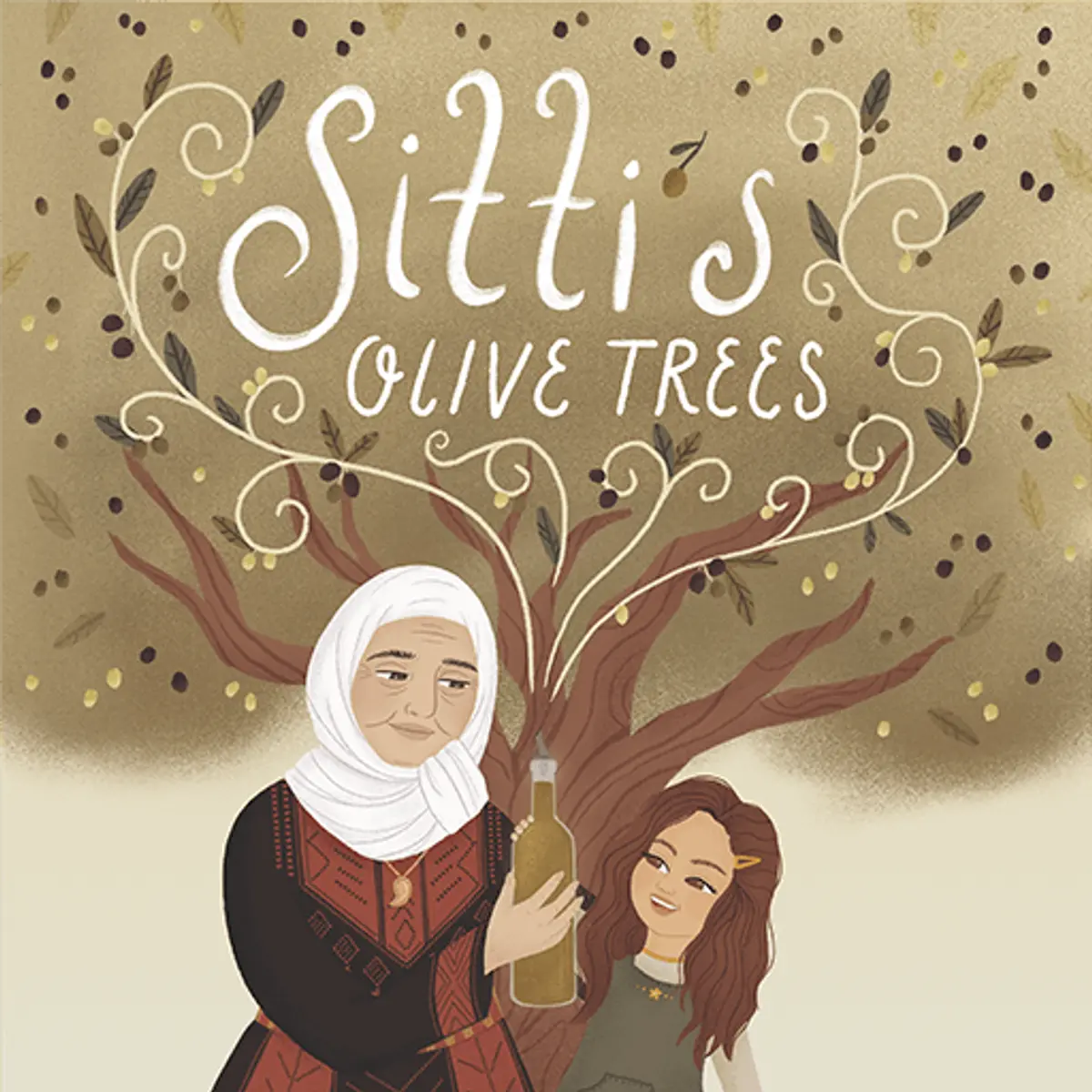
What is Sitti's Olive Trees about?
Sitti's Olive Trees is a picture book for children aged 4 to 12 in which a grandmother tells her granddaughter about the olive harvest in her family's village in Palestine.
Reema is watching Sitti, her grandmother, make hummus when Sitti rubs a drop of olive oil into Reema's curls. Reema is surprised: oil is for eating. But this is no ordinary oil. Reema's uncles send it every year from Palestine, and not a single drop can be wasted. Sitti takes Reema on her lap and tells her about harvest time: families picking green and black olives, ladders against the trees, sheets spread on the ground, the elders sorting the buckets and picnics among the trees at the end of the day. She tells her about the stone walls that hold the soil on the hills, about Reema's great-grandparents, who planted and cared for the trees, and about the oil, soap and olives the family made from them.
The story is about family, heritage and passing stories from one generation to the next. It shows children how much work goes into the food on their table, and why something that has travelled a long way is precious. Sitti's trees still stand, looked after by Reema's uncles, and Sitti promises that one day Reema will plant her own.
Written by Nada Hassan and illustrated by Sumbul Qureshi, it takes about eight minutes to read aloud and is music-free.
What your child will learn
- Stories told by grandparents keep a family's history alive.
- The food on our table comes from a whole year of hard work by farmers and their families.
- Something precious should not be wasted, not even a single drop.
- Working together and sharing a meal bring families closer.
The story of Sitti's Olive Trees
Olive oil in Reema's hair
Reema walked into the kitchen and quietly watched Sitti make her favourite hummus. Sitti added just the right amount of chickpeas and drizzled plenty of olive oil over the top. Then she carefully cut fresh homemade pita bread for Reema to dip in later. The finished dish looked like a work of art, with all its colours together, and it smelled delicious.
As Sitti put the cap back on the bottle, a little oil dripped down its side. She wiped the bottle clean with her fingers and gently rubbed the oil into Reema's soft curls.
"Sitti, why did you rub oil into my hair?" asked Reema. "Oil is for eating!"
"Reema, habibti," said Sitti, "olive oil will nourish your hair and make it healthy. And this is not just any oil. This is zayt zaytun. Your uncle sent it from Palestine, where some of the best olive oil in the world comes from. It has travelled thousands of miles to reach us. Every drop is as precious as your beautiful eyes, and not a single drop can be wasted."
Sitti never bought olive oil from the shop. Every year she waited for it to arrive from Palestine, where Reema's uncles packed it up well and sent it across the ocean. The day it arrived was a celebration. Sitti would open one of the big tanks and take a few seconds to enjoy the fresh smell. It reminded her of being a little girl, running around her family's olive groves.
Harvest time in Palestine
"Come and sit on my lap, Reema," said Sitti, "and let me tell you about our olive trees." Reema loved her grandmother's stories about Palestine, her ancestors and their village. She ran to sit with her, smiling, and waited for the story to begin.
In Palestine, Sitti explained, the olive harvest comes towards the end of each year. It is a time of celebration, and also of hard work, as farmers and their families spend weeks gathering olives: green ones, black ones and every shade in between. First they pick the low-hanging olives and fill their buckets to the rim. The highest olives can only be reached with a ladder, so adults and children climb up to pick them, while a sheet laid under the tree catches every olive that drops. The elders sit nearby and sort through the buckets.
At the end of the day, the families have a picnic among the trees and share a meal. They make tea and coffee over a small fire of branches and leaves, and the elders tell stories from the past. "I remember those times as precious moments filled with joy and laughter," said Sitti. It was a time to stop and appreciate all the work that went into caring for the trees all year.
Walls on the hills
Many of the olive trees grow on steep hills, and some are hundreds of years old. Over the years, the villagers have built stone walls by hand to keep the soil in place, so that the trees stand in rows around the hills. The walls are part of the love they give the trees, keeping their roots firmly planted and the trees tall and straight.
"We tell these stories because they remind us of our roots and keep this old tradition alive," said Sitti.
"Just like you are telling me this story now?" asked Reema.
"Yes, habibti, just like I am telling you now. And one day you will tell it to your children and grandchildren." From one olive season to the next, Sitti said, the stories are passed down, and the trees, which live far longer than people, bring families together.
The family's trees
Reema's great-grandparents had been proud of all the olive trees they planted, cared for and harvested. Each year they took some of the olives to a local mill to be pressed. They kept some of the oil and sold the rest, and they used the olives to make other things too, like olive soap, and olives to eat with every meal. The trees were their pride and joy, and love for them was passed down from one generation to the next.
"Do you have your own olive trees, Sitti?" asked Reema.
"I certainly do," said Sitti. "My olive trees still stand in our village in Palestine, and your uncles look after them with lots of love. Now do you see why every olive and every drop of oil is so special?"
"Yes, Sitti, I do," said Reema, running her hands through her oily curls. "Will I ever have my own olive tree?"
"Yes, my love. One day you will visit Palestine, plant your own trees and run through the fields your ancestors planted. The olive trees are part of who you are, Reema. Know this, and never forget it."
"I won't, Sitti," said Reema. "I promise."
Talk about it afterwards
- Why did Sitti say that not a single drop of the oil could be wasted?
- What jobs did the children and the elders do at harvest time?
- What stories do your grandparents tell about the place where they grew up?
- What would you like to plant one day, and why?
Words to know
- Sitti
- Grandmother, the word Reema uses for her grandmother.
- Habibti
- My dear, said to a girl.
- Zayt zaytun
- Olive oil.
Frequently asked questions
What age is Sitti's Olive Trees suitable for?
Children aged 4 to 12. Younger children enjoy the story of the harvest, and older children can talk about family history and where food comes from.
How long is Sitti's Olive Trees?
About 8 minutes to read aloud.
Does Sitti's Olive Trees have music?
No. Sitti's Olive Trees is music-free.
What does Sitti's Olive Trees teach children?
It teaches children to value their family's stories and heritage, to appreciate the hard work behind their food and not to waste what is precious.