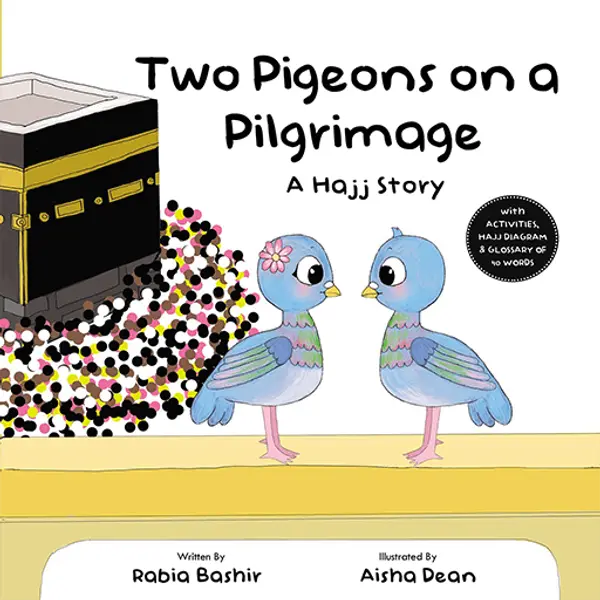
Two Pigeons on a Pilgrimage
Two pigeons fly with the pilgrims through every stage of Hajj, from the Kaaba to Mina, Arafat and Eid, in a rhyming picture book for children aged 4 to 9.
Start with a 7-day free trial.
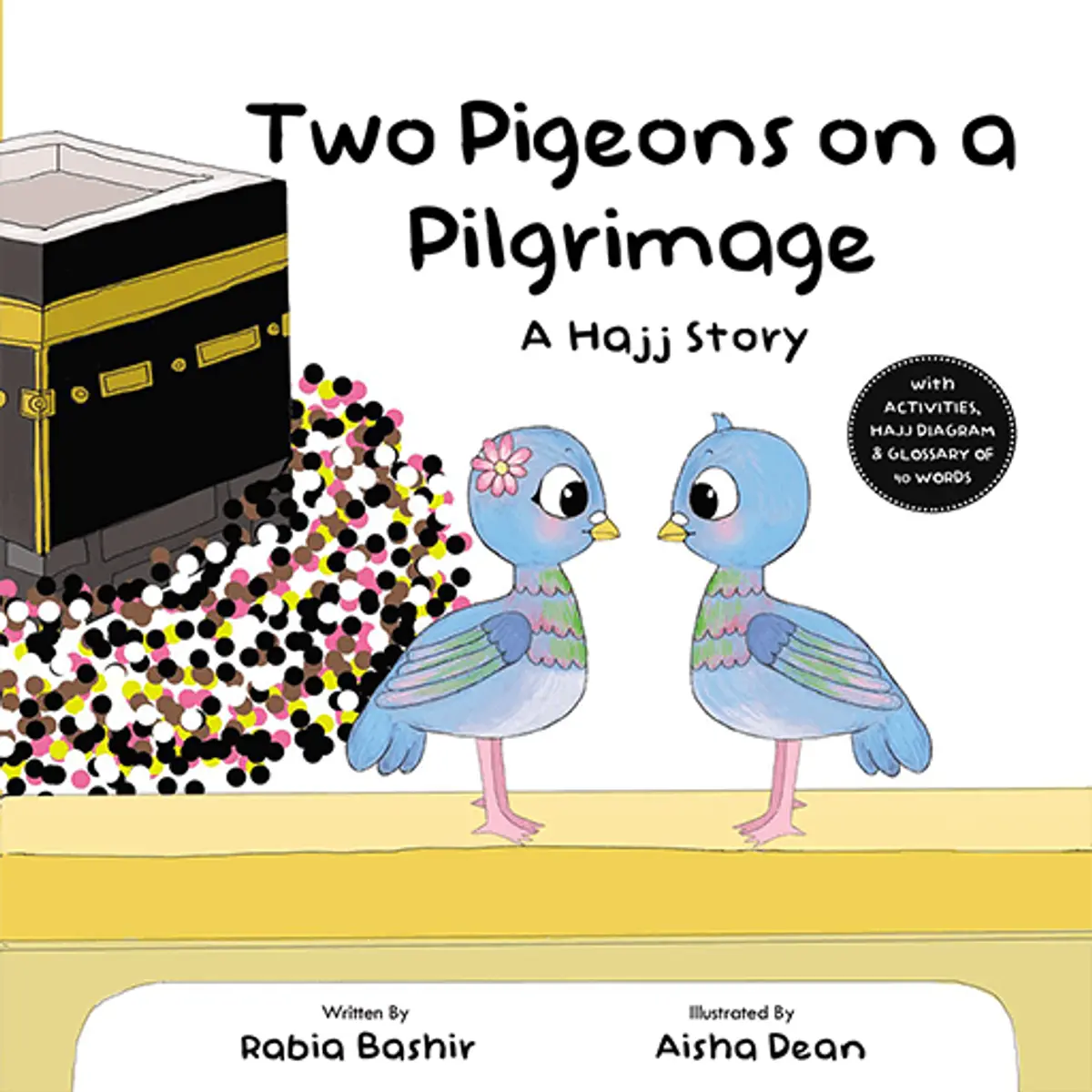
What is Two Pigeons on a Pilgrimage about?
Two Pigeons on a Pilgrimage is an Islamic picture book for children aged 4 to 9 that follows two pigeons as they fly alongside the pilgrims through each stage of Hajj.
With a "Bismillah", the two determined pigeons leave their nest and set off. They start at a busy airport, among pilgrims from far and wide wearing their ihram. In Makkah they circle the Kaaba seven times with the pilgrims, watch them pray behind the Station of Ibrahim, and perch above Safa and Marwah as people walk back and forth and sip Zamzam water. They see the white city of tents at Mina, the pilgrims standing and raising their hands in dua at Arafat, and the night under the stars at Muzdalifah. Back in Mina come the stoning, the Qurbani sacrifice, the cutting of hair and the joy of Eid, then the return to the Kaaba, more days in Mina, and at last a farewell to the Kaaba before the pigeons fly home, feeling pure and new, to the family who missed them.
Each verse begins with the pigeons' feelings: patient, thirsty, grateful, hopeful, nervous, joyful, and finally at peace. The book walks young children through the rites of Hajj in order, with their names, in a way that is easy to follow and fun to read aloud. The book is subtitled A Hajj Story, and its cover says it has activities, a Hajj diagram and a glossary.
It is written by Rabia Bashir and illustrated by Aisha Dean, and it is music-free.
What your child will learn
- Hajj is the pilgrimage to Makkah, made in a set order of rites over several days.
- Pilgrims circle the Kaaba, walk between Safa and Marwah and stand in dua at Arafat.
- Eid al-Adha is celebrated during Hajj, with the Qurbani sacrifice.
- We begin with Bismillah and thank Allah with Alhamdulillah.
The story of Two Pigeons on a Pilgrimage
Two determined pigeons were ready to face a test. With a Bismillah, they spread their wings and left their nest behind.
They began at a busy airport, among pilgrims from far and wide, with glowing faces calling to Allah and their ihrams tied on.
Two patient pigeons circled the Kaaba seven times, while the pilgrims, tiny as ants below them, walked round it to complete a part of their Umrah. Then, facing the Kaaba, the pilgrims prayed behind the Station of Ibrahim (AS).
Two thirsty pigeons perched and watched Safa and Marwah, as the pilgrims went back and forth between them, sipping Zamzam water. The Umrah was now complete, and the pigeons moved with the crowd, thanking Allah for His help so far and saying Alhamdulillah out loud.
Two grateful pigeons lit up at an awesome sight: a sprawling city of tents in Mina, glistening white. The men settled into some tents and the women into others, where they read, prayed and reflected, and children sat with their mothers.
Two hopeful pigeons in Arafat watched the pilgrims stand, and the breeze carried a million duas as the people raised their hands. After sunset, the pigeons flew to Muzdalifah, where the pilgrims picked up small, sandy stones and slept under the stars.
Two nervous pigeons were back in Mina, with surging crowds below, and stones flew towards Shaytan as far as the pilgrims could throw. With the first Rami complete, the Qurbani took place straight after. Then hair was cut, ihrams were removed, and there were showers of cool, cool water.
Two joyful pigeons, their hearts so happy, spread their wings to embrace as the pilgrims hugged and exchanged smiles. It was Eid, and they celebrated. In their finest clothes, and wearing perfume, the pilgrims returned to Makkah, where they performed tawaf and then sa'i, between Safa and Marwah.
Two anxious pigeons went back to Mina with the crowds the next day. Stones were thrown at three pillars this time, while the pigeons hovered out of the way. A day or two later, exhausted but happy, they were back with the women, children and men as the pilgrims bade the Kaaba farewell, praying to visit again.
Two pigeons at peace flew back home, feeling pure and new. They had missed their family so much, and their family had missed them too.
Find more stories about patience, gratitude and making dua.
Talk about it afterwards
- Which places did the two pigeons visit during Hajj?
- How did the pigeons feel at each stage, and why?
- What do pilgrims do at Arafat?
- If you went on Hajj, what would you most like to see?
Words to know
- Ihram
- The sacred state a pilgrim enters for Hajj or Umrah, with its rules; men wear two plain white cloths in it, and women their ordinary modest clothes.
- Tawaf
- Walking around the Kaaba seven times.
- Zamzam
- The blessed water from the well in Makkah.
- Rami
- Throwing small stones at the pillars in Mina.
- Qurbani
- The sacrifice of an animal at Eid al-Adha, shared with family and people in need.
- Umrah
- The lesser pilgrimage to Makkah, which can be made at any time of year.
Frequently asked questions
What age is Two Pigeons on a Pilgrimage suitable for?
Children aged 4 to 9. Its short rhyming verses introduce each stage of Hajj simply.
What does Two Pigeons on a Pilgrimage teach children about Hajj?
It follows the rites in order, from ihram and tawaf to Safa and Marwah, Mina, Arafat, Muzdalifah, the stoning, Qurbani, Eid and the farewell to the Kaaba.
How long is Two Pigeons on a Pilgrimage?
About 3 minutes to read aloud.