Fair Shares
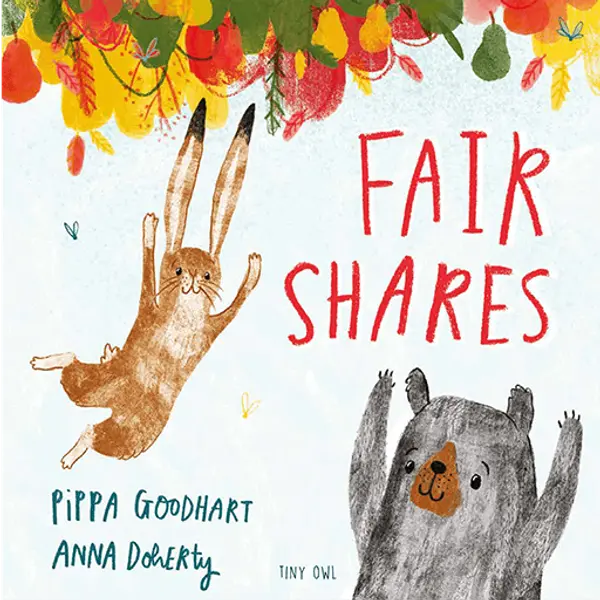
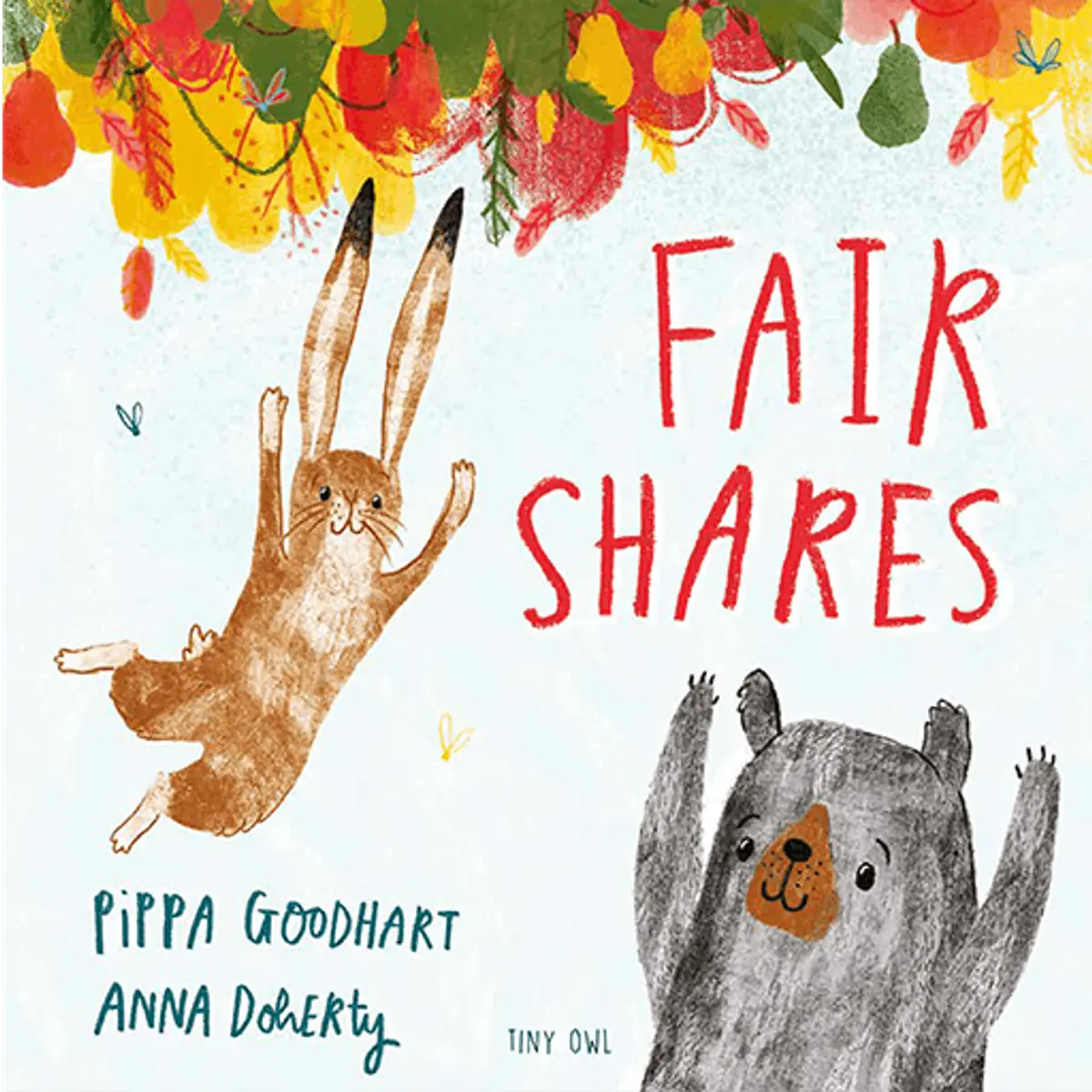
Bear and Hare share out chairs to reach the pears, and Beetle shows them that fair is not always the same, in a picture book for children aged 4 to 9.
Start with a 7-day free trial.
What is Fair Shares about?
Fair Shares is a picture book for children aged 4 to 9 about Bear and Hare, who try to share fairly so they can reach the juicy pears on a tree, and a little beetle who shows them that fair does not always mean the same.
Hare leaps up at the pear tree but cannot reach the fruit, and neither can Bear. Then Hare has an idea: they could stand on chairs. There are three chairs, and Hare shares them out, one for him, one for Bear and another one for him. "That's not fair!" says Bear. So they have one chair each, and Hare leaves the spare chair to one side. Now Bear can reach the pears, but Hare still cannot, and that does not feel fair at all.
A tiny voice speaks up from below. It is Beetle, who explains that giving everybody the same thing is not always fair. Hare needs two chairs to reach the pears, but Bear only needs one. With that sorted, everyone is happy, until Bear notices that Beetle has nothing at all, and the story ends with a joke about what Beetle likes to eat.
Short, funny and full of rhymes, the book gives children a simple way to think about a big question: what is fair? The answer is not always as simple as you might think. It is written by Pippa Goodhart, illustrated by Anna Doherty and published by Tiny Owl.
What your child will learn
- Being fair means everyone getting what they need, not always the same thing.
- We should notice when something is not fair for someone else.
- Friends can solve a problem by listening to each other.
- Even the smallest friend can have a good idea.
The story of Fair Shares
Hare saw a pear tree full of fruit, and he wanted to eat one of those pears. Boing, boing! He leapt up, but he could not reach them. Bother.
Bear saw lots of pears for her too, and she thought she would reach them easily. But actually, she could not reach the pears either. Bother.
Then Hare knew how to reach them. They had no steps or stairs, but they could stand on chairs. "Brilliant," said Bear. Hare shared the chairs out: one chair for him, one chair for Bear, and another chair for him. The end.
"Oi," said Bear. Hare had twice as many chairs as she had, and that was not fair. Hare said sorry. They could have one chair each, and he would leave the spare chair over there. Yes, said Bear, that would be fair.
But Hare still could not reach a pear, and to him this did not feel fair at all. Pick! went Bear. Scrunch, munch. Delicious.
"Er, excuse me," said a tiny voice. Who said that? It was Beetle, down below. Beetle just thought they should know that giving everybody the same thing is not always fair. Hare needed two chairs to reach the pears, but Bear only needed one. That was true, said Hare: so it was fair for Bear to have one chair and for him to have two. Wahoo!
So everyone was happy, until Bear noticed that this still was not fair. Beetle had no chairs and no pears. Would Beetle like a pear? "No, thank you," said Beetle. Beetle did not like pears. So what did Beetle like to eat, then? The book ends with Beetle's answer, and a joke.
Find more stories about kindness, sharing and friendship.
Talk about it afterwards
- Why was it not fair when Hare took two chairs at the start?
- Why could Hare still not reach the pears when they each had one chair?
- What did Beetle teach Bear and Hare about being fair?
- Can you think of a time when fair did not mean the same for everyone?
Frequently asked questions
What age is Fair Shares suitable for?
Children aged 4 to 9. It is short and funny, and older children can talk about what fairness really means.
What does Fair Shares teach children?
That being fair does not always mean everyone getting the same thing, but everyone getting what they need.
Who wrote Fair Shares?
Pippa Goodhart wrote it and Anna Doherty illustrated it. It is published by Tiny Owl.