Wake Up! It's the Ramadan Drummer
Adam's Baba revives the old tradition of the Ramadan drummer to wake the neighbourhood for suhoor, in a picture book for children aged 4 to 9.
Start with a 7-day free trial.
What is Wake Up! It's the Ramadan Drummer about?
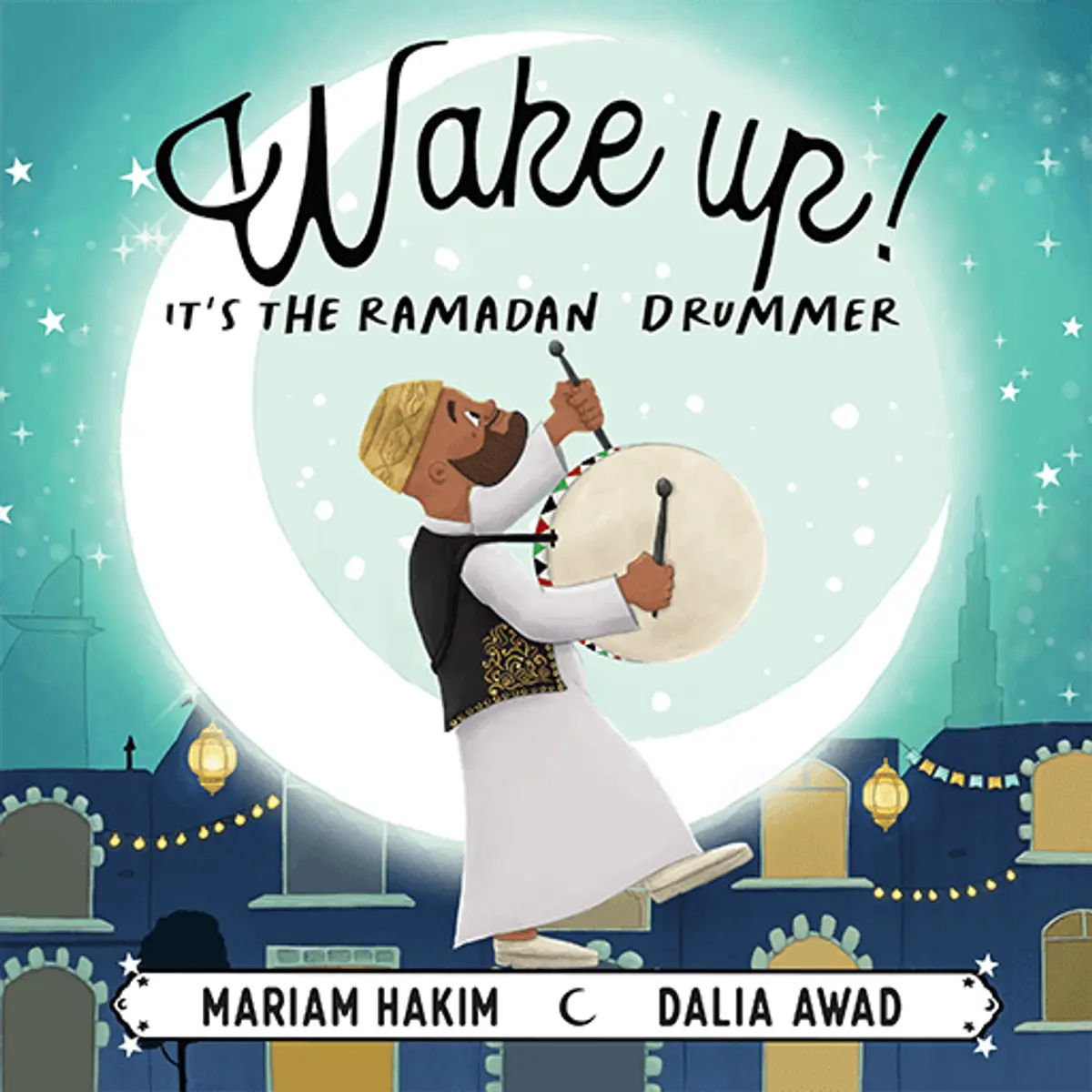
Wake Up! It's the Ramadan Drummer is an Islamic picture book for children aged 4 to 9 about a boy called Adam whose father brings back the old tradition of the Ramadan drummer, who walks the streets before dawn to wake people for suhoor.
This Ramadan is different for Adam's family: Baba has just lost his job. When an old lady in the street calls Baba "Abu Tabla", Adam is puzzled, until Mama shows him a dusty drum and an old waistcoat in the attic. Baba's own father was a Ramadan drummer, a musaharati, who woke the neighbourhood for suhoor and Fajr with a drumbeat and poetry.
Adam persuades Baba to try it. But Baba's first attempt, loud rap from a phone speaker, wakes the cats, the dogs and some very cross neighbours. Baba wants to give up. Then the old lady visits with her own drum and reminds the family why waking for suhoor matters, and the next morning Baba walks the streets again, beating the drum gently and calling people to praise Allah. Neighbours come out to follow him, a video of it is shared around the world, and the tradition begins to come back in many places. Through the people he meets at Fajr, Baba finds new work too.
The book shows children the blessing of suhoor, the value of serving the community and the courage to try again after a setback. It ends with the hadith "Take suhoor, for there is blessing in it."
It is written by Mariam Hakim and illustrated by Dalia Awad, and it is music-free.
What your child will learn
- The Prophet ﷺ told us to eat suhoor, because there is blessing in it.
- Serving our community is a good deed that brings people together.
- When something goes wrong, we can learn from it and try again.
- Even in hard times, there is always hope with Allah.
The story of Wake Up! It's the Ramadan Drummer
A different Ramadan
It was Ramadan, a most special time of year for Adam and his family: a time for fasting, looking for the moon, giving charity, praying more, reading the Qur'an and helping others. But this year things were different. Baba had just lost his job.
"Times are hard," Mama explained. "But there is always hope for a new day."
To cheer Baba up, Mama decided to cook something delicious for iftar, and she sent Baba, Adam and his sister to buy fresh ingredients. As they left the shop, an old lady from their neighbourhood passed by. "Hello, Abu Tabla!" she said happily. "How are you and your family?" Adam was confused. Why had she called Baba that?
The drum in the attic
After iftar, while Baba was at the night prayers at the mosque, Adam asked Mama what the funny name meant. Mama took the children up to the attic, to an old wardrobe. Inside hung a worn velvet waistcoat, an old thobe and a dusty drum. Mama pulled out an old black-and-white photograph.
Baba's own father, she explained, used to walk past people's houses just before dawn in Ramadan. He woke them for suhoor and the Fajr prayer with a drumbeat and soulful poetry. He was called the Ramadan drummer, the musaharati, or Abu Tabla, which means "father of the drum". People used to wake to his drum echoing across the neighbourhood, and it happened in other countries too.
"But what's suhoor again?" asked Adam, knowing he had asked before.
"It's the meal we eat before the sun comes up in Ramadan," said his sister.
"That's right," said Mama. "It's our last meal before we begin our fast. But it's an old tradition now. Time for bed!"
That night Adam lay awake, imagining all the ways a Ramadan drummer could wake up their neighbourhood. He fell asleep dreaming of himself, his sister and all their friends dressed as drummers.
A noisy start
The next day, Adam tried his best to persuade Baba to become the local Ramadan drummer. "No, I can't. Don't be silly," said Baba at first. Then, "Sorry, I'm really busy." But Adam kept asking, and at last Baba gave in. "OK, fine. Let's give it a go."
They spent hours making up words and practising to a drumbeat on Baba's phone. Just before dawn, Baba and the children stood in their street. Adam's sister pressed play, and a loud beat boomed out of the speaker. Baba began to rap, louder and louder, jollier and jollier, and a bit carried away.
Then a cat leapt screeching from a windowsill and landed on a bin lid with a crash. A dog started barking, then another. Lights came on in the windows. "What's all this noise?" "Stop that racket!" "This isn't a pop concert!" People did not like being woken up this way.
"But I'm the Ramadan drummer," pleaded Baba, "here to wake you for suhoor!" It did not work. Baba, Adam and his sister trudged home, disappointed.
Don't give up
Later that day the doorbell rang. It was the old lady from the neighbourhood. "Remember me, Abu Tabla?" she said cheerfully.
"Oh, I'm no Ramadan drummer," said Baba, embarrassed. "It went horribly wrong this morning. I was trying to make it modern, but people weren't happy."
"This morning was just a small setback," said the old lady. People kept pressing snooze on their phones, she explained. They were missing suhoor and the Fajr prayer, and there was no spirit of togetherness any more. "We need you to bring the community back together and help people wake up. Ramadan is a holy month, but you mustn't give up."
"I agree," said Mama. Waking for suhoor was a special time, she told the children: a time to connect with Allah, to make the intention for a new fast, to eat one last meal and then to pray Fajr. Imagine if people missed all that before their day had even begun.
"And where is your drum?" asked the old lady. It was the drumbeat and gentle poetry, she said, that softly woke people and called their hearts to remember Allah. She held out her own old drum. "Use this tomorrow morning, and I will walk behind you, just like in the old days, when people came out to follow Abu Tabla."
Abu Tabla is here
The next morning Baba ate his suhoor early. He tapped the drum lightly and thought carefully about his words. Adam yawned behind him. He was too young to fast, but he would not have missed this for the world.
Baba beat the drum slowly and began to sing. "Wake up, everybody! Yalla, yalla! Abu Tabla is here, and suhoor draws near!" As they walked through the streets, people came out to join them, and children ran behind, clapping along. "Hear the sound of my drum," sang Baba. "Let's praise Allah. Say Alhamdulillah!"
"Alhamdulillah!" someone called out. "I pressed snooze on my phone and nearly didn't wake up. Thankfully we can't press snooze on you, Abu Tabla!" "Keep going!" said another. They walked on through the neighbourhood and stopped at the local mosque to wait for the dawn prayer.
The beat goes on
That evening, Adam's sister ran in late for dinner. "Look, Baba, you've gone viral!" A video of the morning's walk was being shared by thousands of people around the world. News of the Ramadan drummer reached Pakistan, Egypt, Somalia, Turkey and even Indonesia, and people began bringing the tradition back in their own communities.
In Adam's neighbourhood, people were so happy with their new way of waking for suhoor that they paid Baba to do it every Ramadan. And by meeting so many people at the Fajr prayer, Baba found plenty of new work. But the job he looked forward to most was always the Ramadan drummer's. It became the heartbeat of the community in that special month, and every day in Ramadan his drum could be found resting by the door of the mosque, just before Fajr.
Where this story comes from
- Sahih al-Bukhari 1923: Take suhoor, for there is blessing in it.
Talk about it afterwards
- Why did the old lady call Baba "Abu Tabla"?
- What went wrong the first time Baba tried to be the Ramadan drummer?
- Why did the neighbours like the second morning better?
- Why is suhoor a special time in Ramadan?
- How could our family help our community this Ramadan?
Words to know
- Suhoor
- The meal Muslims eat before dawn on a fasting day.
- Iftar
- The meal that ends the fast at sunset.
- Fajr
- The prayer at dawn, the first of the five daily prayers.
- Musaharati
- The Ramadan drummer who walks the streets before dawn to wake people for suhoor.
- Abu Tabla
- Arabic for "father of the drum", a name for the Ramadan drummer.
- Yalla
- Arabic for "come on" or "let's go".
Frequently asked questions
What age is Wake Up! It's the Ramadan Drummer suitable for?
Children aged 4 to 9. It has plenty of humour for young children, and older ones can talk about the family's hard times and the tradition behind the story.
What is a Ramadan drummer?
A musaharati, someone who walks the streets before dawn in Ramadan, beating a drum and calling out to wake people for suhoor and the Fajr prayer. In the story, it is an old tradition that Adam's Baba brings back.
Is Wake Up! It's the Ramadan Drummer based on a hadith?
It ends with the hadith "Take suhoor, for there is blessing in it", reported in Sahih al-Bukhari.
How long is Wake Up! It's the Ramadan Drummer?
About 14 minutes to read aloud.