
How to Explain Hajj to Children
Stories, Games and What Actually Works
9 min read
Summary
Hajj is one of the most profound experiences in Islam — but explaining it to children can feel overwhelming. This guide covers why starting with the story of Prophet Ibrahim makes everything else click, what each Hajj ritual means in simple terms, and how to make the ten days of Dhul Hijjah feel real at home, whether or not you’re in Makkah.
Every year, around two million Muslims make one of the most remarkable journeys on earth – the Hajj. And every year, children watch their parents prepare – or hear about it from friends, from madrasa, from family – without really understanding what it means. Kids also start asking questions about Hajj: What is it? Why do people go? Why can’t we go? If your child has been asking about Hajj and you’ve been wondering how to explain it to them in a way that stays with them, you’re in the right place.
It’s something we think about a lot at Miraj Stories. As Muslim parents and founders ourselves, we know how hard it can be to explain something so profound in a way that lands with a five-year-old who is more interested in snacks than stories, an eight-year-old who asks “but why” to everything, or a twelve-year-old who thinks they already know everything.
The thing is, children don’t need to understand every ritual to connect with Hajj. What they need is the story behind it. And once they have that, everything else follows.
At Miraj Stories, we’ve been working towards making Islamic values and beliefs accessible to kids in their own language. And Hajj is a special milestone for Muslim families where the right story, told the right way, can stay with our children for life.
This guide is our attempt to help you have that conversation – what to tell your kids about Hajj, and how to make it land.
Why explaining Hajj to children starts with Prophet Ibrahim
Most parents instinctively start with facts: Hajj is the fifth pillar, it takes place in Makkah and pilgrims circle the Kaaba. That’s all true. But on their own, they don’t mean much to a child.
What makes Hajj come alive is the story of Prophet Ibrahim, alaihi salaam. His trust in Allah, the courage of his wife Hajar, and a miracle that still flows today in the form of Zamzam water. Every single ritual of Hajj points back to this family and what they went through. Once your child knows that, the rituals stop being a list and become a memory.
Here’s the story, in words you can use with your child tonight:
Long ago, Allah asked Prophet Ibrahim to take his wife Hajar and their baby son Ismail to an empty desert valley, what we now call Makkah, and leave them there. Ibrahim trusted Allah and followed His command. When Hajar found herself alone with no water for her crying baby, she ran back and forth between two hills, Safa and Marwa, desperately searching for help. Seven times she ran. Suddenly, water gushed from the ground at baby Ismail’s feet. That was Zamzam. It still flows today – a sign of Allah’s miracle and a testimony to the trust of Ibrahim and Hajar.
Years later, Allah tested Ibrahim again, this time asking him to sacrifice his beloved son. Ibrahim spoke to Ismail about the command he received. Without hesitation, Ismail replied: ‘Do as Allah commands, Father.’ At the very last moment, Allah spared Ismail and provided a ram instead. Later, Ibrahim and Ismail built the Kaaba – a house of prayer for all the people. And every ritual of Hajj, every single one, reflects something from this amazing story. (Abridged from the ‘Ibrahim’s Sacrifice’ audiobook, available in the Miraj Stories App.)
We spoke to Abrar Hammuda, an Islamic Studies teacher at Fitra Madrasah in Surrey, UK, about the most important aspect of the story of Ibrahim, Hajar and Ismail. She said that children are particularly curious about the Prophet leaving Hajar and baby Ismail in the desert all on their own and the profound wisdom behind his act.
The fact that Ibrahim was ordered to leave his wife and beloved son alone in a desert... children feel the weight of that image, the trust, the fear, the aloneness, and then the miracle that came from it. Once that lands, the rituals follow naturally.
Abrar Hammuda, Islamic Studies Teacher, Fitra Madrasah, UK
She also made an important point we think is worth holding onto: children can engage with Hajj at any age, what matters most is how you tell the story. A three-year-old doesn’t need to understand tawaf, but they can understand that Hajj is a special journey to Allah’s house, and that millions of Muslims get together. If your child is very young, five or six, you don’t need more than the outline of the story. If they’re eight or nine, they’ll want to know why. If they’re older, they’ll ask harder questions. The story of Ibrahim meets all of them.
On the Miraj Stories app:
- Ibrahim’s Sacrifice: Audiobook
- Yan’s Hajj: Picture Book
- Yan’s Hajj: Audiobook
- Circling the Kaaba: Here I Am, Oh Allah: Video
What do the Hajj rituals mean for children?
Once your child knows the story of Prophet Ibrahim, explaining what happens during Hajj becomes much simpler.
The white clothing, Ihram
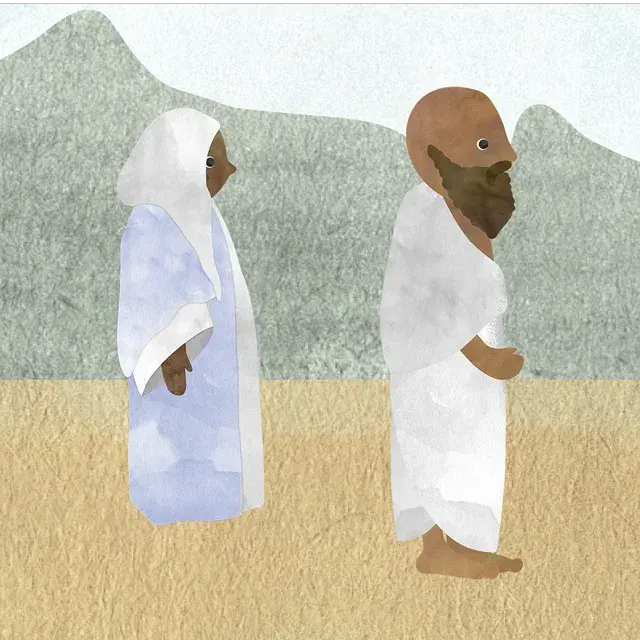
Pilgrims enter Makkah wearing simple white garments with no labels or markers of wealth or status. What appeals to kids here is that everyone is treated equally in the House of Allah. As Abrar Hammuda puts it, “Perhaps the most important thing to focus on is what Hajj teaches children about equality and that all Muslims are the same before Allah. The rituals and their meaning should go hand in hand. If not, children might know what to do but not why it matters.”
Circling the Kaaba, Tawaf
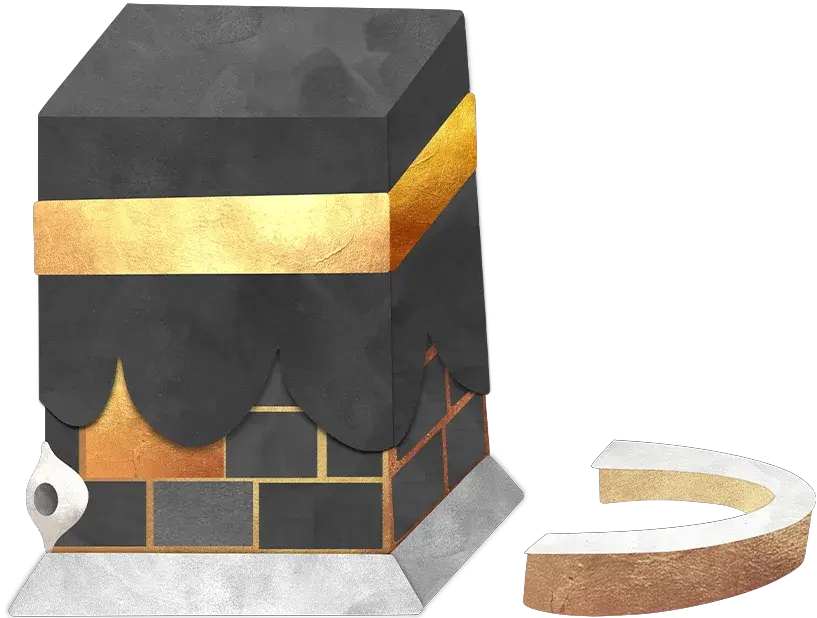
Kids usually watch with amazement millions of people moving together seven times around the Kaaba, which was first built by Ibrahim and Ismail, all saying the same thing: “Here I am, O Allah. Here I am.” If you can, show them a video of tawaf. That image often grabs their attention immediately.
Walking between the hills, Sa’i
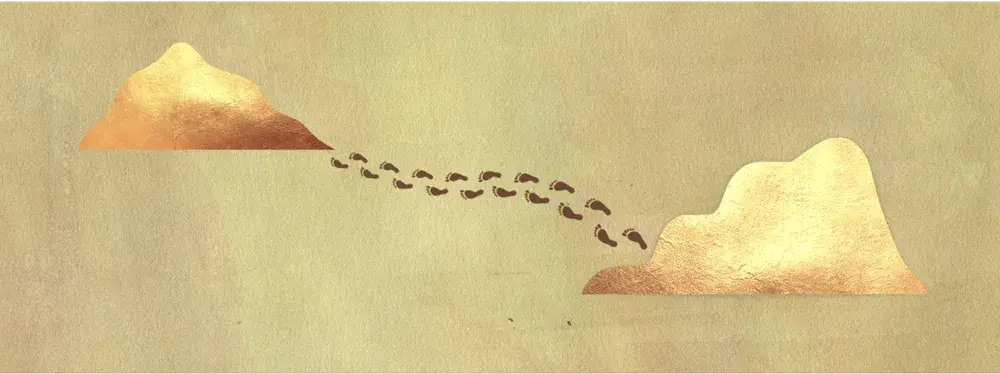
Pilgrims walk between Safa and Marwa seven times. This ritual is known as Sa’i. For a child, the most important thing to know is that Sa’i is about the story of Hajar, and that pilgrims have been following her footsteps. Each step remembers her courage and what happened because of it. You can say: “They’re walking to remember Hajar. How brave she was, and how Allah answered her prayers.”
Arafah
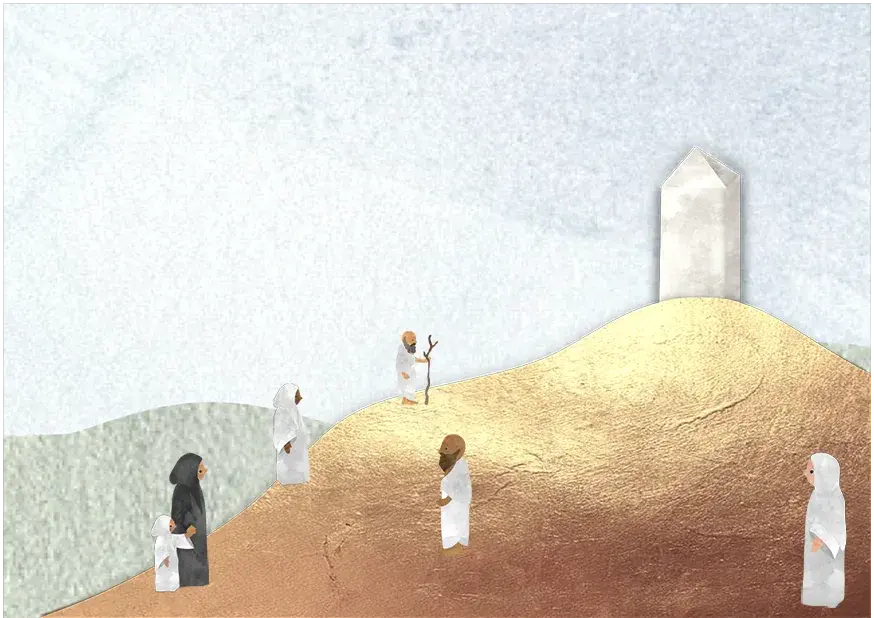
It’s often said that Hajj is all about Arafah. If someone does not stand on the plain of Arafah to pray and reflect, their pilgrimage is not complete. For older children especially, seeing millions of people gathered together, asking Allah for forgiveness, is a profound image to think about.
The stoning and Eid ul-Adha
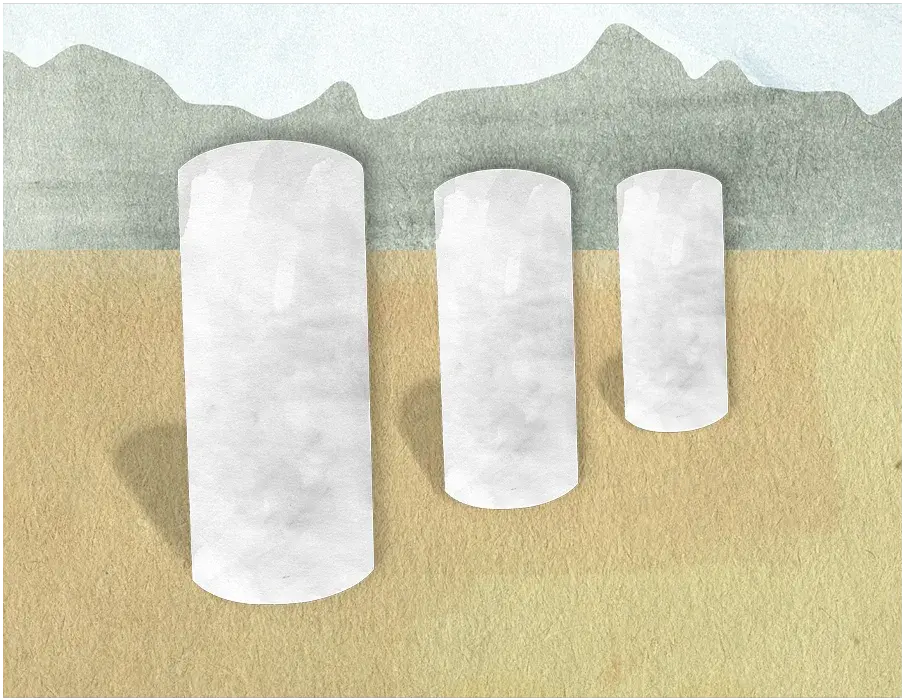
Pilgrims throw stones at pillars representing the Shaytan who tried to stop Ibrahim. After that, they remember Allah’s mercy in sparing Ismail and celebrate Eid ul-Adha together. At Miraj Stories, we use the Ibrahim’s Sacrifice audiobook to help children understand the importance of that moment before they celebrate Eid. This helps make the day more meaningful for them.
Explore the rituals on Miraj Stories:
What Hajj activities can you do with children at home?
One of the questions we hear most is: how do I make Hajj meaningful for my family when we’re not in Makkah? The ten days of Dhul Hijjah are your answer. They’re among the most sacred days in the Islamic year, and there’s a lot you can do with your children right where you are.
- Tell the story of Prophet Ibrahim together. Read it, listen to it, act it out. Pause and ask questions. Why do you think Ibrahim trusted Allah? How do you think Hajar felt?
- Watch tawaf together. Show your child videos of the Kaaba and the millions of pilgrims circling it. That image alone – people from every corner of the earth, all wearing white, all moving together – is awe-inspiring, especially for young minds.
- Learn the Talbiyah. The words pilgrims say throughout Hajj, “Labbayk Allahumma Labbayk” are something even young children can learn. Saying it together during the days of Hajj connects your home to what’s happening in Makkah.
- Make extra dua. Encourage your child to make their own duas for your family, their friends and the pilgrims on Hajj. It’s a small act, but it builds a sense of being part of something much larger than your own home.
More Hajj stories on Miraj Stories:
- Two Pigeons on a Pilgrimage: Picture Book
- Two Pigeons on a Pilgrimage: Audiobook
- I Went for Hajj: Picture Book
- Ibrahim’s Sacrifice: Audiobook
Key takeaways
- Start with the story of Prophet Ibrahim: the rituals follow naturally once children know the why
- Children can engage with Hajj at any age. What changes is how you tell it
- Every ritual connects back to Ibrahim, Hajar and Ismail: help your child make that link
- Hajj teaches equality before Allah. That’s worth saying out loud
- You don’t need to be in Makkah to make Dhul Hijjah feel meaningful at home
Frequently asked questions about Hajj for children
What is Hajj and why is it important in Islam?
Hajj is the fifth pillar of Islam, an annual pilgrimage to Makkah during the month of Dhul Hijjah. Every Muslim who is physically and financially able is required to make it at least once in their lifetime. It’s a demonstration of devotion to Allah, a commemoration of Prophet Ibrahim’s family, and one of the most powerful expressions of Muslim unity: millions of people from every country standing together as equals.
How do you explain Hajj to a young child?
Start with the story of Ibrahim rather than the rituals. Tell your child that Hajj is a journey to Allah’s house, the Kaaba in Makkah, and that everything pilgrims do remembers the story of Ibrahim, Hajar and Ismail. Keep it simple. The goal isn’t comprehension but connection.
What age should children start learning about Hajj?
There’s no minimum age. A three-year-old can understand that Hajj is a special journey to Allah’s house. At around six to eight, children can engage more deeply with the story of Ibrahim. By nine to twelve, they can understand the full sequence of the rituals and the meaning behind them. What changes is not the subject; it’s how you tell it.
What Hajj activities can we do at home with kids?
Tell the story of Ibrahim together – read it, listen to it, ask questions. Watch videos of tawaf and talk about where the pilgrims come from. Learn the Talbiyah as a family. Make extra dua during the ten days of Dhul Hijjah. On the Miraj app, you’ll find audiobooks, picture books, and interactive games about Hajj – expertly designed to make these conversations easier for you and your children.
What is the connection between Hajj and Eid ul-Adha?
Eid ul-Adha happens on the 10th of Dhul Hijjah, just after the main Hajj rituals. It celebrates Allah’s mercy in saving Ismail after Ibrahim showed complete trust. Muslims worldwide, even those not performing Hajj, sacrifice an animal and share the meat. The two are inseparable: Hajj is the pilgrimage, Eid ul-Adha brings its meaning into every Muslim home.
What is the importance of Hajj for children?
Why is it important to teach children about Hajj? Hajj isn’t just a pilgrimage, it’s one of the clearest expressions of what Islam is built on: trust in Allah, equality before Him, and the idea that faith is lived, not just believed. Teaching children about Hajj gives them a framework for understanding all of these things together, rooted in a story rather than a set of rules.
Are there Islamic stories about Hajj suitable for kids?
In the Miraj Stories app you’ll find “Ibrahim’s Sacrifice” (audiobook), “Yan’s Hajj” and “Two Pigeons on a Pilgrimage” (picture books and audiobooks), interactive Hajj games, and the video “Circling the Kaaba: Here I Am, Oh Allah.” They’re designed to make the story of Hajj real and memorable for children aged 4 to 9.
Read more from Miraj for Grown-ups
Is YouTube Haram for Kids?
Is YouTube haram? What do scholars say? How app design affects children, and a 7-point framework to judge apps safe for children. Plus: screen-free alternatives for Muslim families.
Read more
Islamic Parenting in the West
What does Islamic parenting mean for Muslim families in the West? This guide covers tarbiyah, Quranic values, how strict to be, and what actually works.
Read more
Raising Screen Smart Children
If you’ve ever given your child a tablet to get through a difficult moment, you’re not alone.
Read more